How to grant access to Business Manager
Facebook Business Manager is essential when you want to start running Facebook ads, and here we will show you how to set it up.
The first presentation was from Axel Springer, the largest digital publisher in Europe. Is generative AI a savior or a curse? AI isn't new, but this is the first time it has been made accessible to millions of people. The impact of this change is enormous.
Of course, this change also brings risks. How will AI change the way we consume content? How will it change the way we create it? How will we deal with deepfakes and fake news? Verified accounts could be one solution to these problems. But they were upfront about the fact that they don't know what comes next. Their goal is to become an AI-first company. So, is generative AI a savior or a curse? Neither. It’s a valuable ally and friend.
The next presentation was from Microsoft on the transformation of advertising in the era of generative AI. Search engines are here to stay, but only for simple searches. For complex queries—like finding a restaurant for 10 people that is vegan-friendly and suitable for people with nut allergies—we will use LLMs, or large language models like ChatGPT. What blew my mind was the OpenTable plugin, which can automatically book a table. Restaurants should focus on integrating this plugin into their reservation systems. You can find a guide below the video. E-commerce owners can also leverage AI by incorporating it into their online stores so they can answer complex questions. This way, when a customer wants to buy another product, they don't have to go back to Google search and click through to a different website. An e-shop must be able to answer questions like:
To ensure e-shops can answer these questions, you have to teach them. The ideal approach is to write a blog and try to answer every question you can think of that a customer might ask, for example: how to choose a gift, who to choose a gift for, recommend something to me, or what to buy for a woman. Microsoft was thrilled that 72% of traffic to Bing came from Google. Until now, it was always the other way around, and I assume that about 90% of people who go to Bing are actually just looking for Google Chrome. Since the integration of ChatGPT into Bing, over a billion prompts have been generated and over 750 million images created. The service that integrates AI into Microsoft products is called Copilot.
The next presentation was from Google and focused on how to prepare for the holiday season. Google started with goal prediction. It’s necessary to set realistic goals, look at historical years, and set targets based on them. We know how volatile the COVID period was, so it’s important to look at pre-COVID data as well. Before launching time-limited promotions, you need to start your campaign at least two weeks in advance so the algorithms have time to learn. The biggest shopping events are Black Friday, Cyber Monday, Christmas, and post-holiday sales. An interesting piece of information for me was that as the economy slows, the ratio between impulsive and thoughtful purchases shifts. Google states that 20% of purchases are impulsive and 80% are thoughtful. In my training sessions, I always tell our clients how important data is. Google recommends focusing on first-party data—the data you have in your e-shop or website administration—as well as your most profitable customers, conversion value, app data, and data from your brick-and-mortar stores. I expected a little more from this presentation. If you want to prepare even better for the holiday season, check out the article I wrote last year for Shoptet.
The next presentation was from Facebook (or Meta) on supporting brand growth and return on investment across media. Efficiency, which we most often measure in the Czech Republic using PNO (cost-to-revenue ratio), is a key metric for our sales volume. Meta talked about the effect Brand Building has on PNO and how it is shifting into the digital space. Meta borrowed a chart from marketing legends Les Binet and Peter Field to show the difference between short-term activation (discounts) and long-term brand building, and how marketers should combine both styles. Meta answered the most common questions from advertisers. There is plenty of evidence that a brand can be built online, as this analysis shows. The main point here is that we can build a brand on both traditional and digital platforms. We can measure brand growth using Brand Equity. Brand Equity refers to the total value and perception of a brand by consumers. It includes brand awareness, perceived quality, customer loyalty, and the financial value of the brand. They demonstrated the growth of Brand Equity using the example of New York's JFK airport.
The closing presentation was from YouTube, revealing a new world of video and creative possibilities. Learn how Google's artificial intelligence can help you unlock transformative growth on YouTube. The world of video is changing faster than ever before; thanks to AI, the way we create, consume, and market content is evolving. YouTube is number one in delivering relevant content. YouTube Shorts now sees over 50 billion views daily, serving as an introduction to long-form content. YouTube introduced its ABCD best practices. A new "flip and trim" feature is also coming, allowing you to easily convert your landscape videos into portrait format. We attended the expo last year as well, but due to COVID, we didn't enjoy it nearly as much as we did this year.
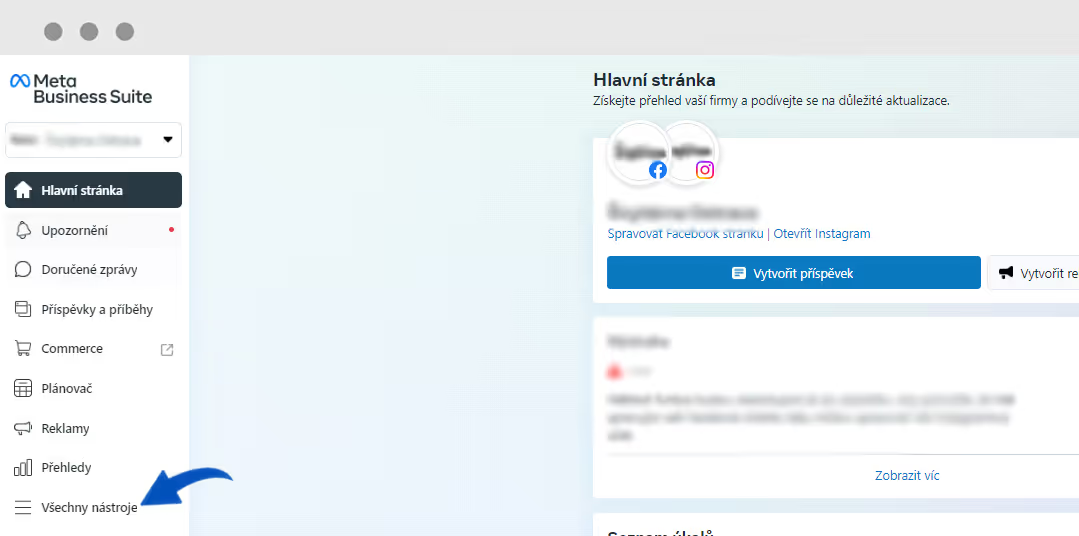
Facebook Business Manager is essential when you want to start running Facebook ads, and here we will show you how to set it up.
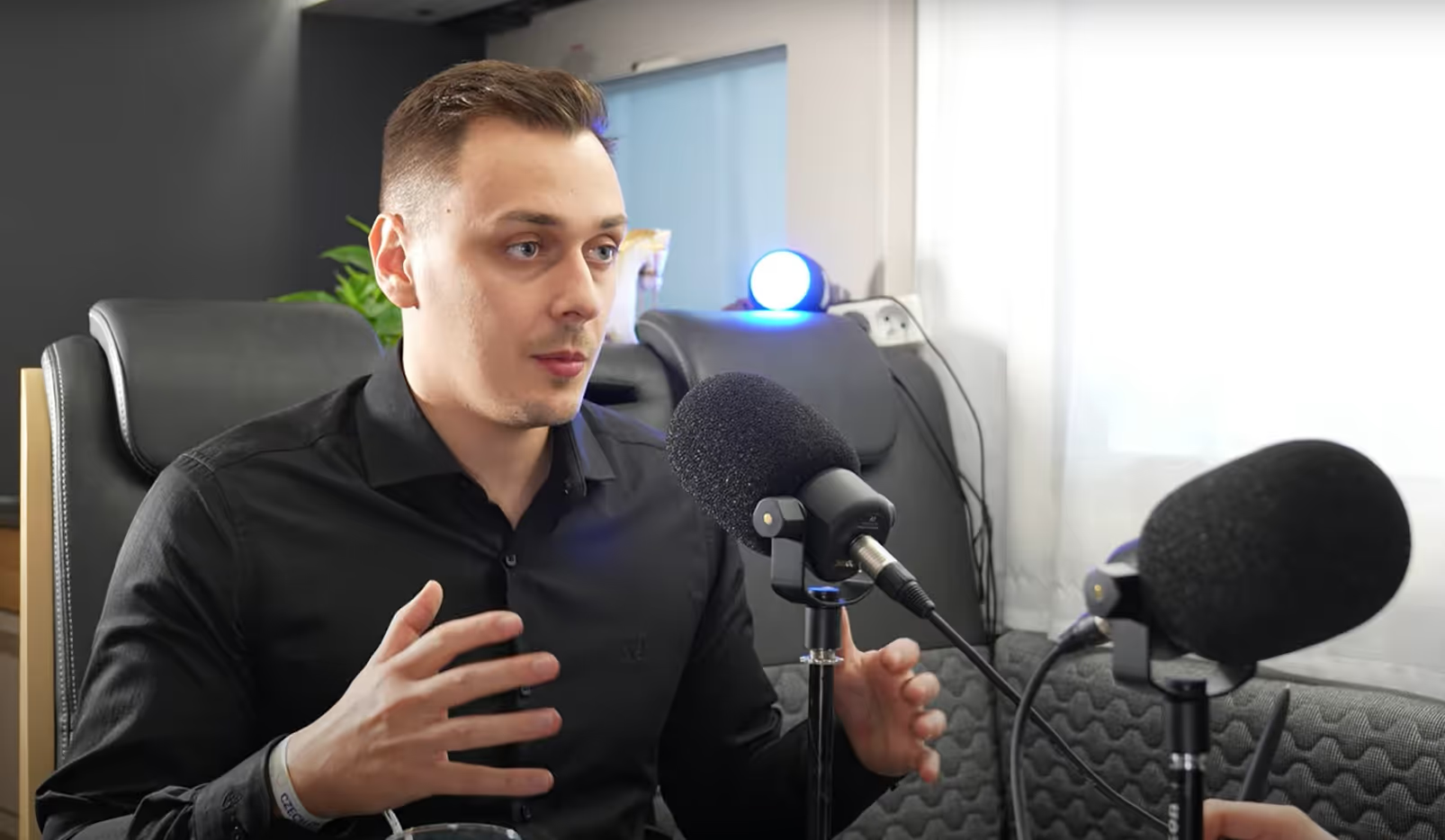
An interview about performance advertising and current trends.
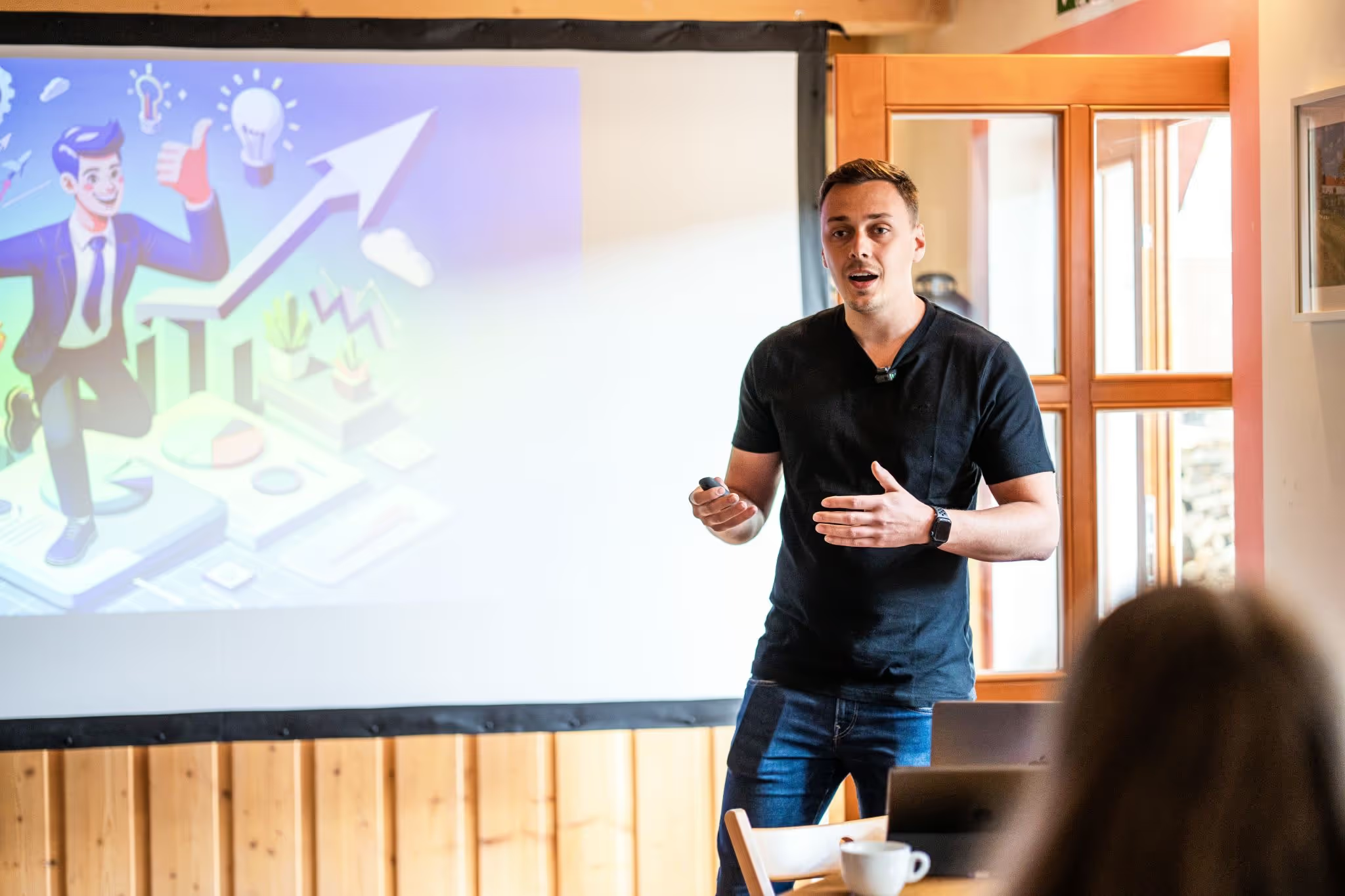
3 days of the most interesting PPC know-how. That was the 14th PPC Camp, where we enjoyed 20 presentations from industry leaders that were definitely worth listening to.
Don't miss any important events or news from our world